

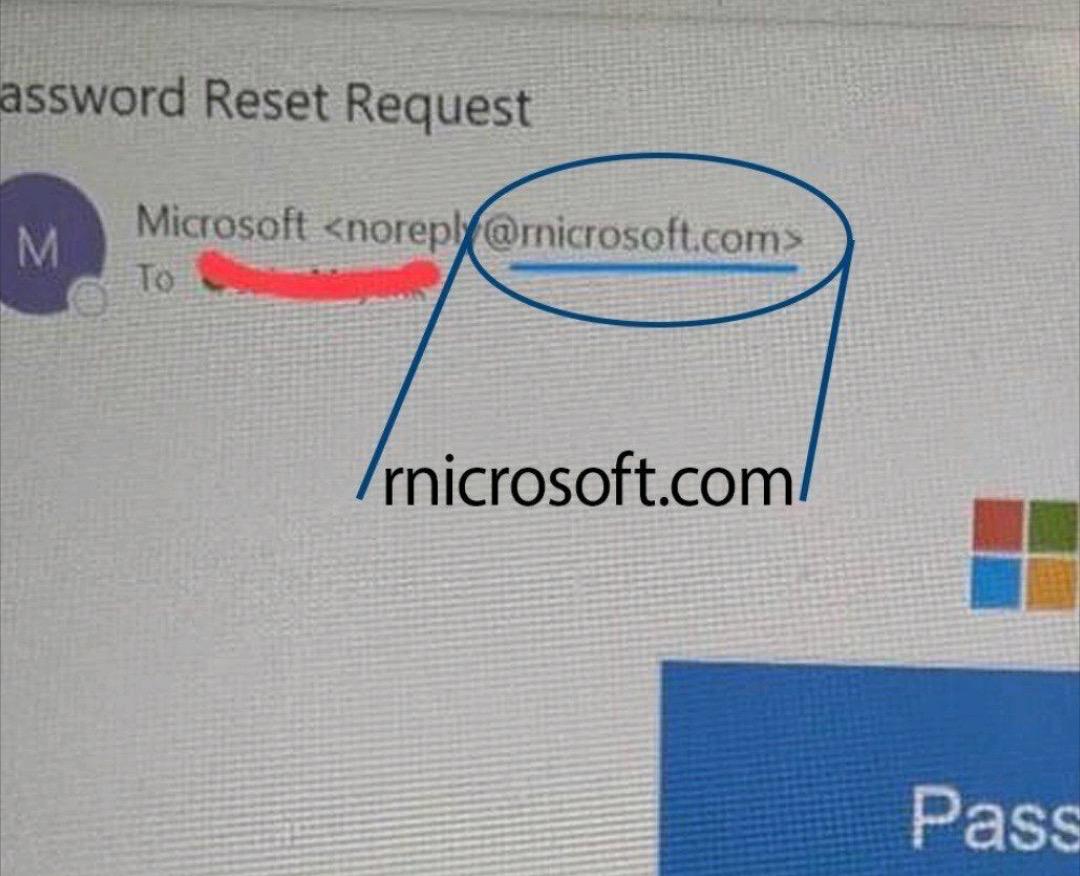
A new wave of phishing scams is spreading online, and the images above illustrate how attackers now use extremely subtle tricks to deceive people. These scams often involve fake email addresses that look almost identical to legitimate ones. At a quick glance, users may fail to notice the manipulated characters, making the scam highly effective.
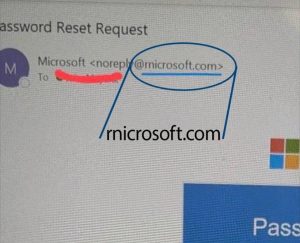
The attached images reveal an email that appears to come from “noreply@microsoft.com” but actually uses “noreply@rnicrosoft.com.” Scammers rely on the fact that “rn” closely resembles the letter “m,” especially on mobile screens. This small alteration is easy to overlook and allows fraudsters to impersonate trusted companies convincingly.
These scams work by registering look-alike domains, copying official branding, and sending messages that mimic real alerts such as password resets or security warnings. Once a user clicks the fraudulent link, they may be redirected to a fake login page designed to steal passwords, install malware, or hijack personal accounts.
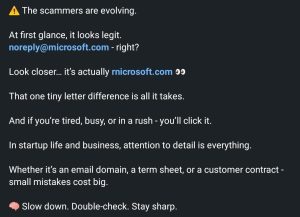
This tactic succeeds because scammers exploit moments when people are busy or distracted. The combination of urgency, professional-looking design, and minimal differences in domain names makes the deception extremely convincing. Even experienced users can fall victim if they are not paying close attention to email details or domain spellings.
To stay safe, users must double-check sender addresses, hover over links before clicking, enable two-factor authentication, and access important websites manually. These simple habits can prevent major losses. As scammers become smarter, vigilance becomes essential; even a single misplaced letter can expose your account and personal information to serious risks.
